


When you are researching vehicle specifications, reading your owner’s manual, or shopping for a trailer hitch, you will come across many different ratings and capacities. One of the most common and important measurements is the tongue weight, but what does it mean? La Grange area Toyota and Scion service explains tongue weight.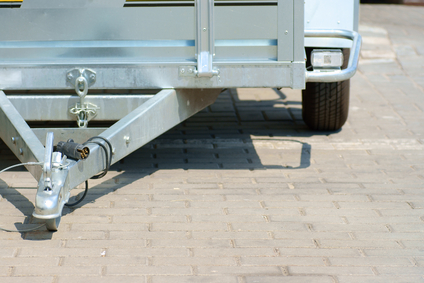
What is a Tongue?
If you have a car, truck, minivan, or SUV, you will need to know your vehicle’s tongue weight if you plan to do any towing with the vehicle, despite the size of the load you are pulling. . The trailer tongue is the extension at the front of a trailer that connects to the ball on the towing vehicle. The coupler is at the very end of the tongue; it is the rounded connection that sits on the tow ball.
What is Tongue Weight?
Now that you know what the tongue is, you can better understand the weight. The tongue weight is the downward force the trailer coupler exerts on the hitch ball. If the tongue weight is too light, the trailer will sway when it is on the road. If the tongue weight is too heavy, steering, braking and handling are reduced. This is why it is very important to balance your cargo: 60% of the weight in front of the trailer’s front axle and 40% in the back. Never exceed your hitch’s tongue weight.
How do I Determine My Tongue Capacity?
There are a few strategies to help you determine the tongue weight. Remember this rule of thumb: tongue weight should be between 9% and 15% of the vehicle’s gross trailer weight. The trailer weight can be found in the owner’s manual. Use the following strategies to calculate trailer weight:
- Tongue weight scale
Place a tongue weight scale underneath the scale when the trailer is attached and loaded.
- Bathroom scale
You can weight smaller trailers with a bathroom scale. Level the trailer and the scale. Place the coupler on the loaded trailer on the bathroom scale.
- Commercial scale
If you are doing some heavy duty towing, a commercial scale will be more beneficial. First, weigh the vehicle with the tongue weight. Then, weigh the vehicle without the tongue weight. To determine the tongue weight, subtract the vehicle-only weight from the truck-and-trailer weight.
![[Facebook]](https://www.continentaltoyota.com/blogs/725/wp-content/plugins/bookmarkify/facebook.png)
![[LinkedIn]](https://www.continentaltoyota.com/blogs/725/wp-content/plugins/bookmarkify/linkedin.png)
![[Twitter]](https://www.continentaltoyota.com/blogs/725/wp-content/plugins/bookmarkify/twitter.png)
![[Yahoo!]](https://www.continentaltoyota.com/blogs/725/wp-content/plugins/bookmarkify/yahoo.png)
![[Email]](https://www.continentaltoyota.com/blogs/725/wp-content/plugins/bookmarkify/email.png)
Connect with us


